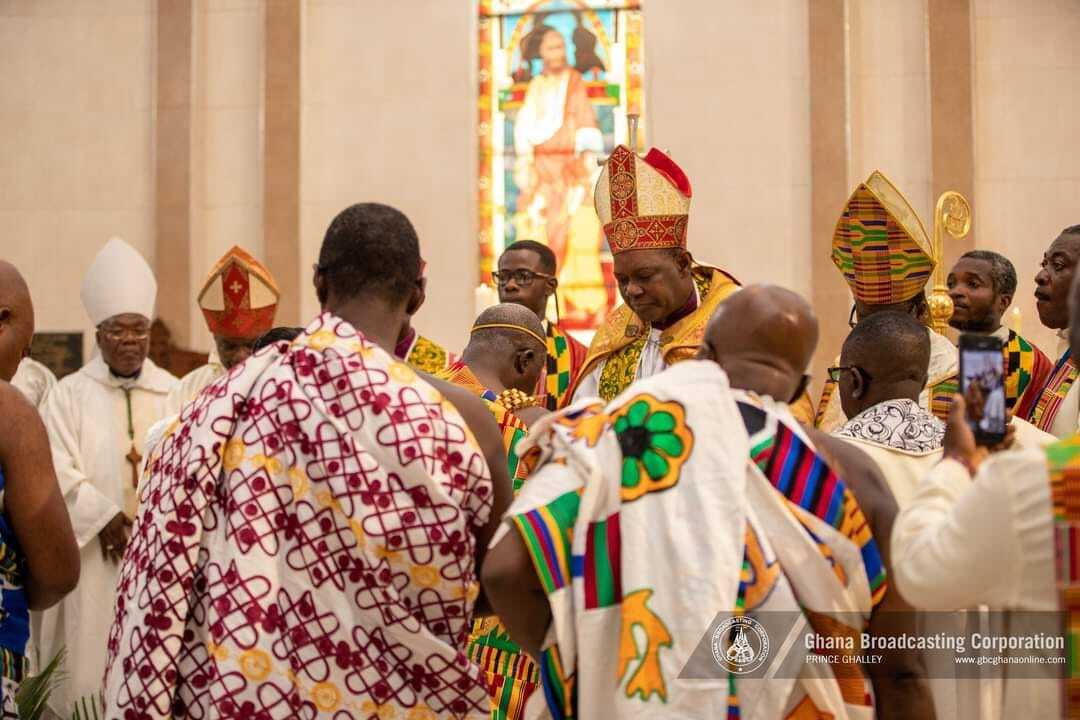
OUR STORY
The Methodists, Basel and Roman Catholic Missions had their roots firmly grounded in Ashanti, especially in Kumasi, long before the Church of England (Anglican) Mission, which had been established in the Gold Coast Colony, found a footing in Kumasi, the Ashanti capital.
The Church of St. Cyprian’s in Kumasi was established in the early part of the second decade of the twentieth century, precisely in 1913, with the arrival of the Venerable G. W.
Morrison (M.A., PhD), who was appointed by the Society for the Propagation of the Gospel (SPG). Ven. G. W. Morrison had a particular love for Africans, and it was he who named the Church in Kumasi after St. Cyprian, the African Bishop and Martyr.
The English Church Mission (ECM), as it was then popularly known, established its mission post at a spot close to the present site of Barclays Bank in Kumasi. The membership of the early church comprised mainly expatriate government staff and commercial agents who were adherents of the Anglican Church, together with some Africans, mostly residents from the coastal towns where the church was already operating.
In November 1913, the English Church Mission (ECM) established a school, St. Cyprian’s School, under the headship of Mr. Aubyn, who had been posted from the sister parish of St. Andrew in Sekondi. As the membership of the church increased, it became imperative to provide a new chapel to accommodate them. Thus, in 1915, a church building was put up on a hill on the eastern side of the Subin River. This building became the Mother Church, where services were held until the Cathedral Church replaced it.
From 1913 to 1922, the parish was run by the late Archdeacon G. W. Morrison, the Rev. A. H. Candler, and the Rev. Robert Fisher, who visited the parish frequently from Cape Coast. When the Rev. A. H. Candler retired, a member of his staff, Mr. C. H. Elliot, took charge of the parish until the arrival of the Benedictine monks of the Anglican Abbey in Pershore, England. The induction into the parish of these Benedictine pioneers—Rev. Fr. Dom Peter Haris, O.S.B., and Rev. Fr. Dom Dominic Carter, O.S.B.—introduced the High Church service into the parish.
The departure of these monks once again ushered in a succession of secular priests, including the Ven. (Archdeacon) Sugett, the Rev. Fr. H. T. Horsefield, the Rev. Fr. John Evans, the Rev. Fr. M. W. Hicken, the Ven. J. H. Brewer, and the Rev. Fr. G. C. Cates.
Between 1943 and 1961, several African Priests who had been trained in the Theological Institution established by Bishop Aglionby were posted to the Parish of St. Cyprian the Martyr, Kumasi. They included Rev. Fr. O. M. Renner (1943-1947), Rev. Fr. J. F. Cobbah-Yalley (Senior) and W. Cobbah-Yalley, Rev. Canon J. F. Appiah (1952-1954), the Ven. K. P. Sakyiama (1961) and others.
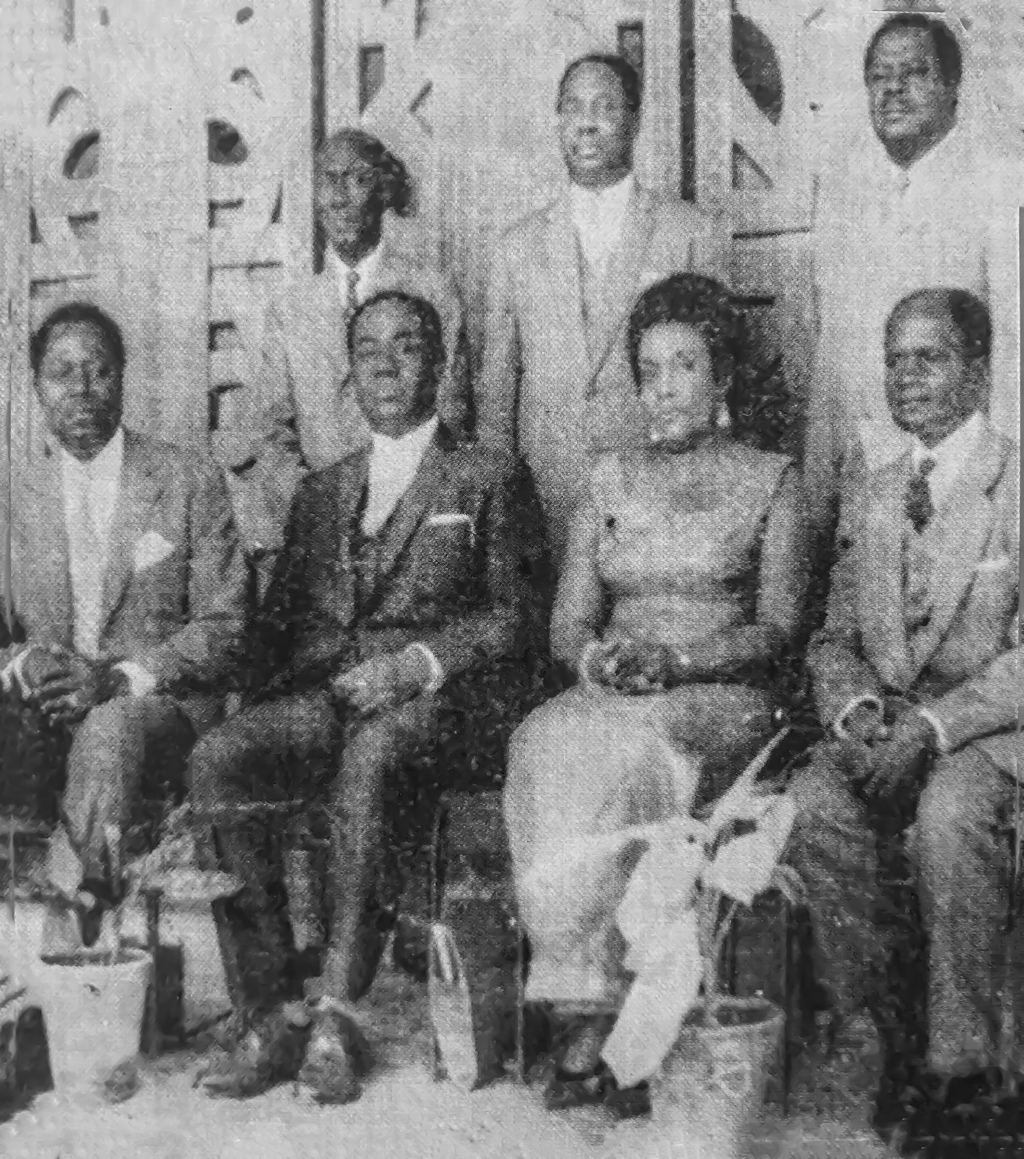
Negotiation Committee of the New Kumasi Diocese
(Sitting Right - Left: A.E. Nkansa, Dr Joy Blankson-Hemans, Justice Henry K. Prempeh, B.M. Kufuor,
Standing Right - Left: D. Quarshie, William K. Prempeh, W Boatin)
When the late Rt. Rev. Richard Roseveare retired as Bishop of Accra, he appointed the Rt. Rev. I. S. M. LeMaire as Vicar General. The consecration of two Assistant Bishops, namely the Rt. Rev. A. K. Nelson for Accra and the Rt. Rev. John Benjamin Arthur for Kumasi, took place later. St. Cyprian’s Parish was, for the first time, placed under the charge of an Assistant Bishop, thus paving the way for the eventual elevation of St. Cyprian’s Parish to the status of a Cathedral.
On 17th February 1968, the foundation stone of the new Cathedral was laid by the late Sir Osei Agyeman Prempeh II, K.B.E., the Asantehene. This occurred 37 years after the late Rev. Canon Stacy Waddy had cut the sod for the Cathedral site and had laid a temporary foundation stone for the Cathedral.
In 1973, St. Cyprian’s Parish Church became St. Cyprian’s Cathedral Church, the seat of the new Diocese of Kumasi under its first Bishop, the Rt. Rev. John Benjamin Arthur (1973-1983). The Rt. Rev. John Benjamin Arthur had to grapple with the numerous teething problems associated with the establishment of a new Diocese, the next after the Diocese of Accra, which covered the rest of Ghana.
The Rt. Rev. John Benjamin Arthur was succeeded by the Rt. Rev. Edmund Kodjoe Yeboah (1985–1998), a graduate of King’s College, Oxford, who consolidated the work begun by his predecessor. Over time, he was able to stabilise the changing fortunes of the new Diocese and significantly increase the number of priests serving there. He also sent several personnel abroad for training as evangelists and Church Management Workers. He retired from office in September 1998.
The third Bishop of the Diocese of Kumasi was the Most Rev. Prof. Daniel Yinkah Sarfo (1999–2021). He brought with him new and youthful energy, strong spiritual and charismatic gifts, and a variety of useful and progressive ideas that enabled him to realize his own vision, as well as those of his predecessors, and to strengthen the foundations they had already laid.
While encouraging his Diocese to work towards self-reliance in the upkeep of the parishes and Diocese, he kept the door open for talented members of the Church—professionals, medical doctors, businessmen and consultants, architects, lawyers—all who had the expertise needed to help the Diocese become viable and self-supporting, to volunteer their services.
Apart from the spiritual growth of church members, the following projects were undertaken during his tenure: an Anglican hostel at the Kwame Nkrumah University of Science and Technology, Kumasi; a retreat centre at Nkawie; a women’s vocational centre at Afari; an eye hospital at Jachie; a diocesan cooperative and credit union; a diocesan farm at Ejura; and the establishment of the Anglican Diocese of Asante Mampong.
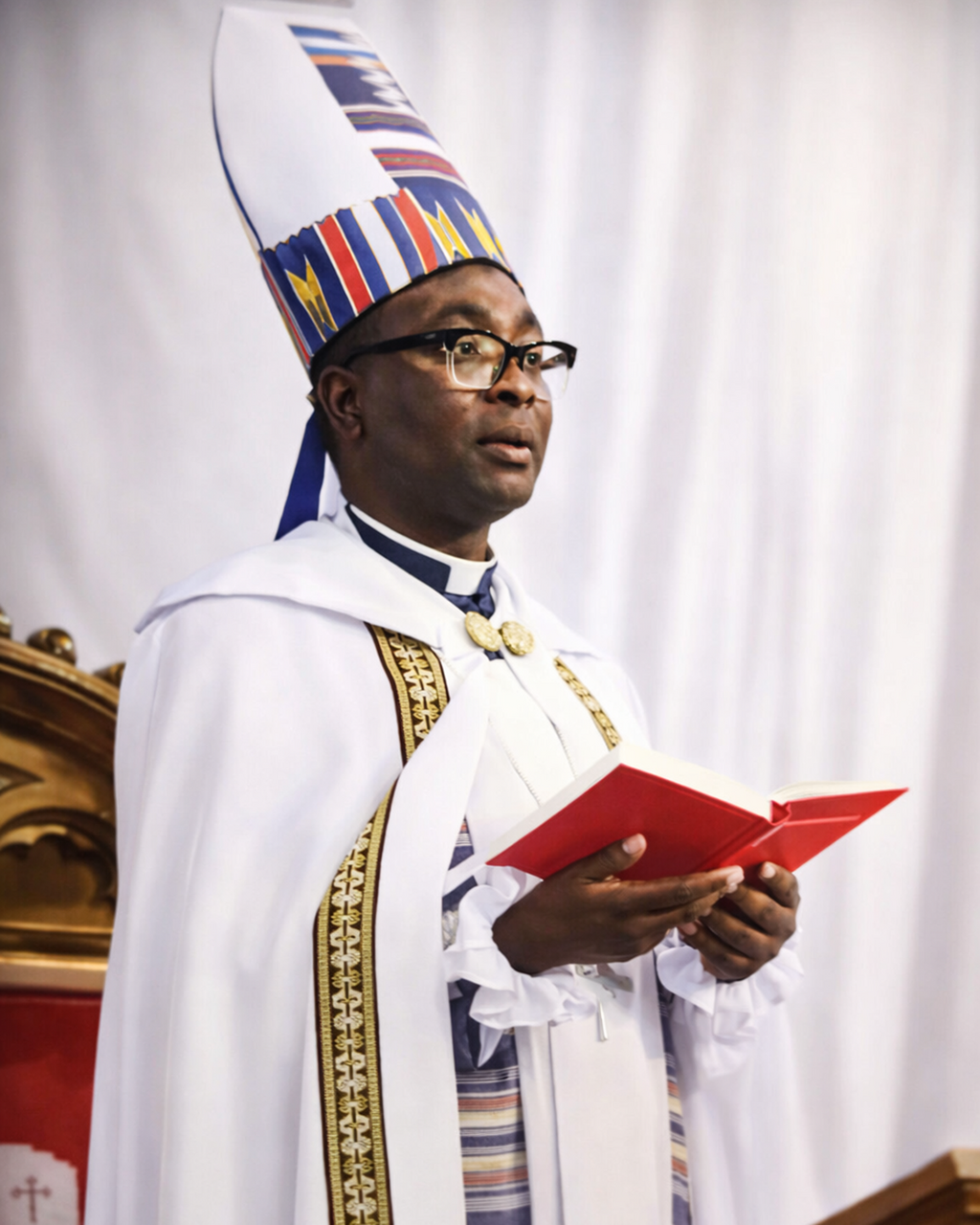
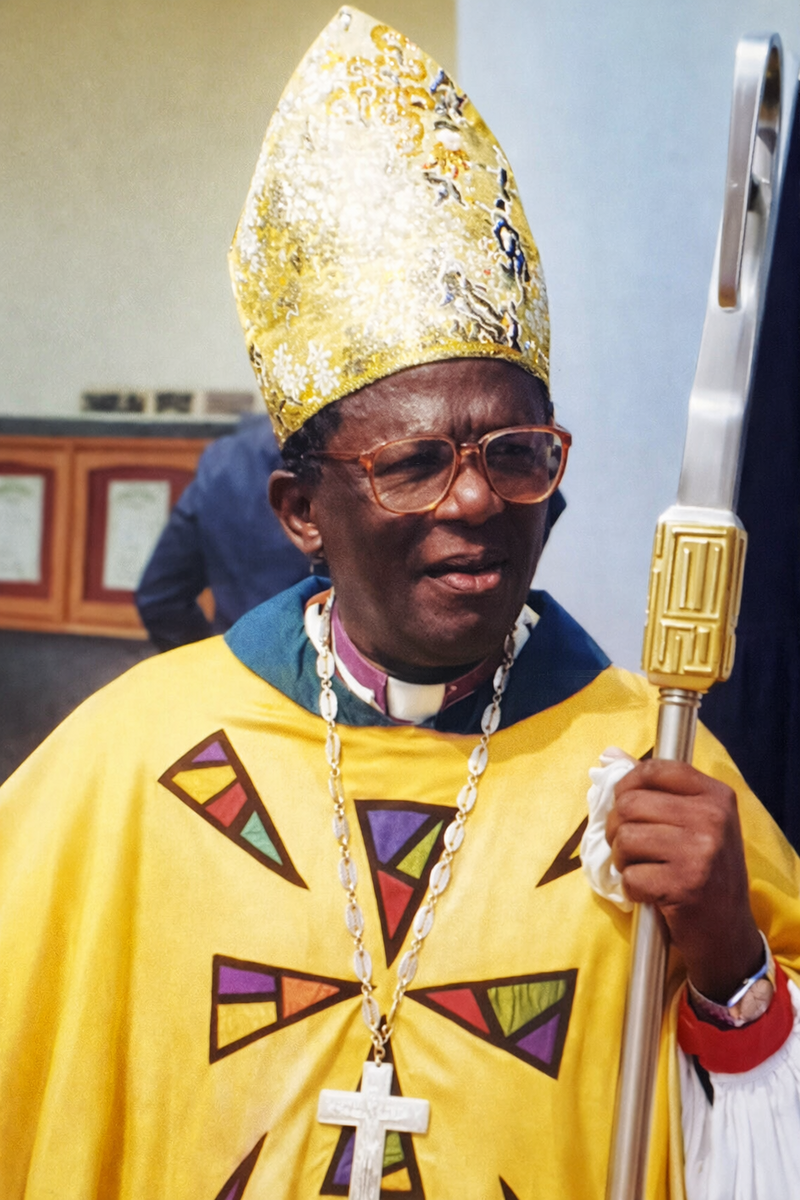
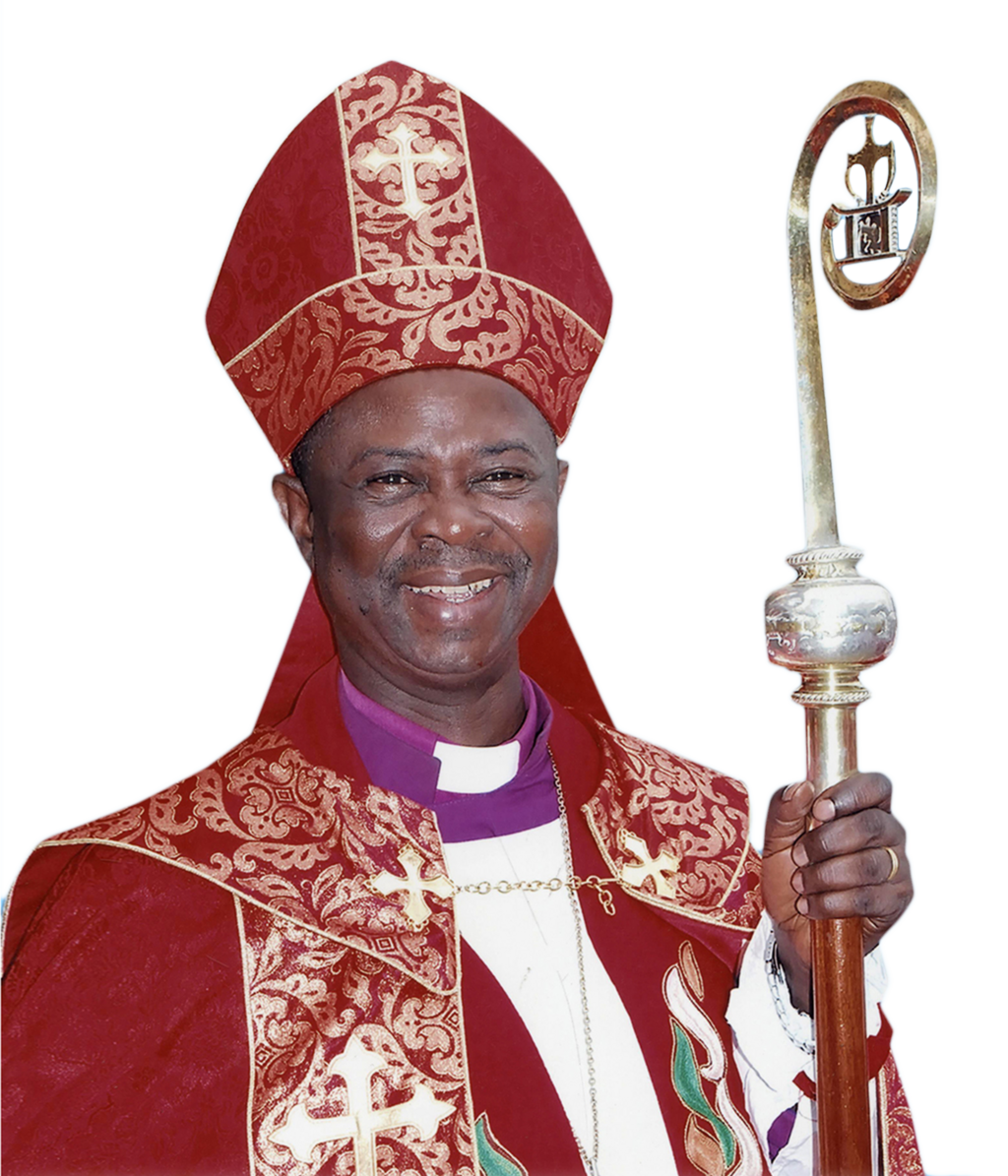
1. The Rt. Rev'd John Benjamin Arthur
(First Diocesan Bishop of Kumasi)
2. The Rt. Rev'd Edmund Kodjoe Yeboah
(Second Diocesan Bishop of Kumasi)
3. The Most Rev'd Prof. Daniel Yinkah Sarfo
(Third Diocesan Bishop of Kumasi)
The fourth and current Bishop of the Diocese is the Rt. Rev. Oscar Christian Amoah (2021–date). His vision is to promote the spiritual and socio-economic growth of the Diocese and to transform it into a more dynamic, vibrant, and prosperous institution through prayer, teamwork, determination, and hard work. He is committed to pursuing, strategically and pragmatically, massive evangelism, Christian education, improved welfare for clergy and catechists, sound financial management policies, investments and the development of our health facilities, human resource development, the establishment of schools of ministry, the development of the ministry of lay canons, professional guilds and associations, youth and children’s ministry, the creation of the Bekwai-Obuasi Suffragan Area, and the undertaking of foreign missions in collaboration with the Internal Province of Ghana.
The Diocese is endowed with abundant natural and human resources that are yet to be fully tapped. What the Diocese needs is the financial support necessary to advance its plans and successfully implement its projects. It is the ambition of the Bishop, the Clergy, and the entire membership of the Churches in the Diocese to develop it into a modern, viable entity that relies less on dues collected from parishioners and more on sustainable, income-generating ventures. We warmly welcome anyone who is willing to offer a helping hand in our efforts to achieve this goal.
The relationship between the Ashanti Monarchy, the Anglican Church, and the city of Kumasi dates back to the return of Nana Prempeh I from Seychelles, where he spent the years of his exile. While in exile, the King was converted to Christianity in the Anglican tradition by English church missionaries.
Upon his return to the Gold Coast in 1924, he was pleased to find an Anglican church established in Kumasi, and he lent his full support to the church there throughout the rest of his life.
His successor, Nana Osei Agyemang Prempeh II, was also a very strong supporter of the Anglican Church. He was instrumental in the construction of St. Cyprian’s Cathedral and in the negotiations that led to the creation of the Diocese of Kumasi out of the former Diocese of Accra.
Otumfuo Opoku Ware II was likewise a staunch member of the Anglican Church. Like his predecessors, he left no stone unturned in his efforts to see the church progress towards maturity. His presence at services was an added encouragement to the congregation, and his assistance to the church in diverse ways will always be remembered with deep affection.
The current King of Ashanti, Otumfuo Osei Tutu II, was himself an ardent and faithful Anglican and a strong pillar of St. Anne’s Anglican Church long before his ascent to the Golden Stool as King of Ashanti. Since his enstoolment, he has not relented in his support for the church, and it is evident from his frequent attendance at services, both at the Cathedral and at St. Anne’s Parish, that he will maintain and strengthen his faith and affection for Christ and the Church in the years that lie ahead.